Radiant Barriers in Arizona
Attic radiant barrier installation to cut Arizona summer heat gain.
Radiant Barrier Installation in Scottsdale, AZ
Scottsdale Spray Foam Insulation installs radiant barriers in attics throughout Scottsdale and the northeast Valley. In a climate where the sun delivers months of triple-digit heat straight onto your roof, radiant heat is not a minor factor. It is the main event. A radiant barrier attacks that heat load at the roof line, before it ever becomes a problem your insulation and air conditioner have to solve. Call (480) 660-2705 for a free estimate.
A radiant barrier is a highly reflective surface, usually aluminum foil laminated to a substrate, installed in the attic to reflect radiant heat back toward the roof instead of letting it radiate down onto your attic floor and ductwork. It does not replace insulation. It does a different job, and in the Arizona climate it does that job well.
If your attic insulation is already at depth and your house still runs hot, or if your ductwork sits in the attic and your AC never seems to catch up, a radiant barrier is often the missing piece. Call (480) 660-2705 and we will evaluate your attic and tell you honestly whether one makes sense.
How Radiant Barriers Fight Desert Heat Gain
Your roof absorbs solar radiation all day. The roof deck gets hot, and a hot surface radiates heat in every direction, including straight down onto your attic floor, your ductwork, and your insulation. Conventional insulation resists conductive heat flow but does little against this radiant transfer, because the heat is traveling as infrared energy across the air gap, not conducting through material.
A radiant barrier reflects that infrared energy back up toward the roof instead of absorbing it. Aluminum reflects roughly 95 to 97 percent of radiant heat when the surface is clean and faces an air space. The result is a cooler attic floor, cooler duct surfaces, and less total heat working its way into the living space below.
This is not exotic technology. Radiant barriers have been used in hot climates for decades and are standard practice in much of the Sun Belt. What matters is the installation: the foil must face an air gap to work, it must cover the roof area broadly, and it must be installed so dust accumulation is minimized, because dust on the reflective surface reduces performance over time. Our installations account for all three. Call (480) 660-2705 to discuss your attic.
Attic Temperatures During a Scottsdale Summer
On a 110 degree Scottsdale afternoon, roof surface temperatures can exceed 160 degrees, and attic air temperatures of 140 to 150 degrees are routine. Every surface inside that attic, including the top of your insulation and the outside of your ducts, is being radiated at by a roof deck that hot. Ductwork carrying 55 degree air through a 150 degree attic is fighting a losing battle, and every leak in that ductwork is cooled air paid for and never delivered.
A properly installed radiant barrier can meaningfully reduce attic temperatures, with reductions in the range of 20 to 30 degrees commonly reported in hot-climate studies when the barrier is applied to the underside of the roof deck. The exact number depends on roof color, ventilation, and orientation, but the direction is always the same: less radiant load means a less hostile attic.
The practical effects show up where homeowners feel them. Upstairs rooms that lag behind the thermostat catch up faster. The AC cycles off more often in the evening. Ducts deliver air closer to the temperature the equipment produced. If your house checks all the boxes on insulation depth and still struggles, this is usually why. Call (480) 660-2705 and we will take a look.
Foil Barriers vs. Radiant Barrier Roof Decking
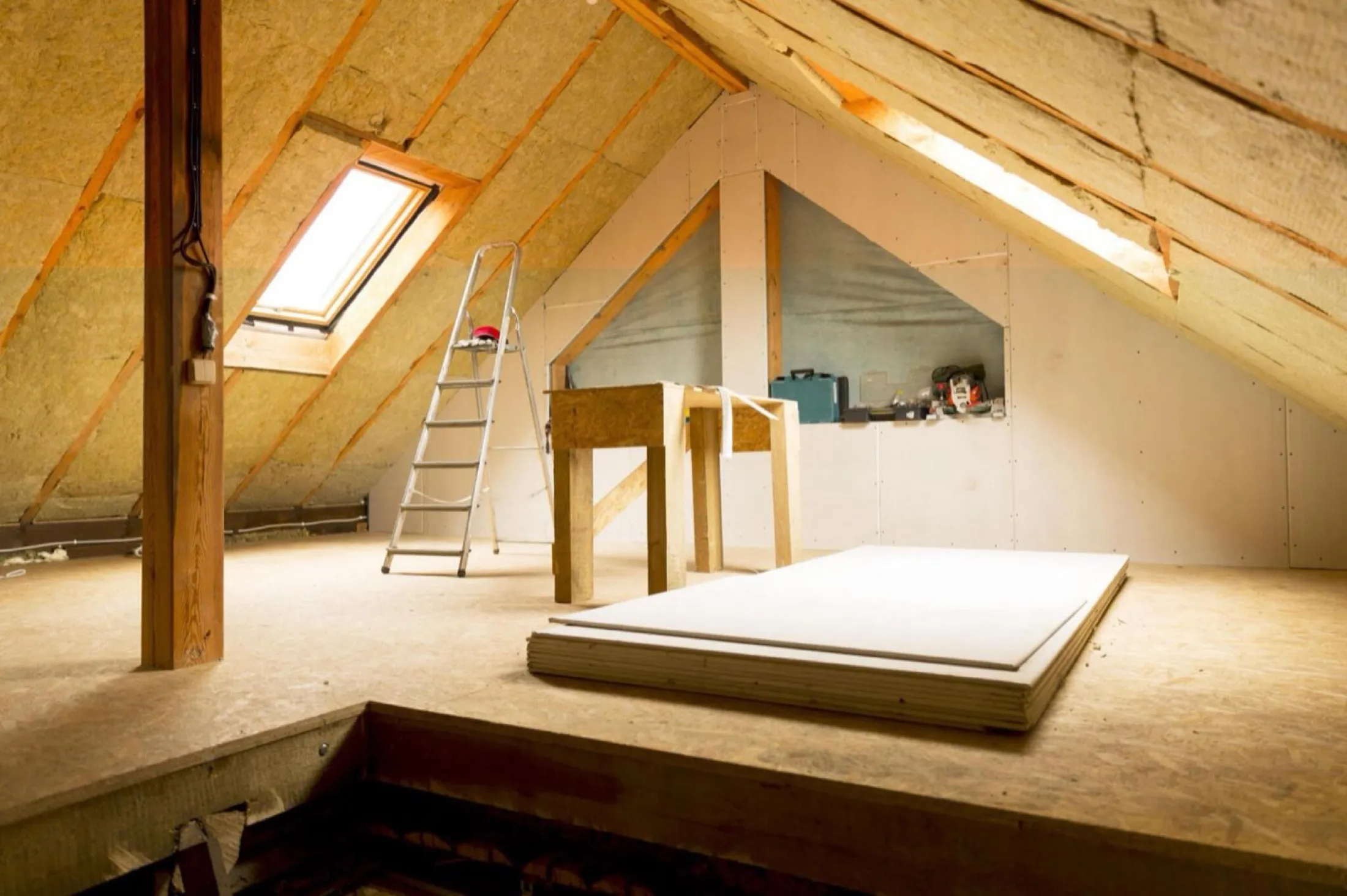
There are two main ways to get a radiant barrier into a roof assembly. The first is retrofit foil: reinforced aluminum foil material stapled to the underside of the roof rafters in an existing attic, shiny side down toward the attic air space. This is the standard approach for existing homes, and it is what we install most often in Scottsdale. It covers the roof area, faces the required air gap, and stays up off the attic floor where dust would settle on it.
The second is radiant barrier roof decking: OSB or plywood sheathing manufactured with a foil face, installed during construction or re-roofing with the foil facing down into the attic. If you are building new or replacing a roof, this is the cleanest way to get the barrier, because it costs little more than standard decking at that stage and requires no separate attic work.
Both approaches work. Retrofit foil serves existing homes; foil-faced decking serves new builds and re-roofs. What does not work well is laying foil material on the attic floor over the insulation, because dust quickly coats the upward face and kills reflectivity. If a quote you received involves floor-laid foil, ask hard questions. Call (480) 660-2705 for a straight answer on which approach fits your house.
Pairing a Radiant Barrier With Attic Insulation
Radiant barrier and insulation are teammates, not substitutes. The barrier reduces the radiant load entering the attic. The insulation resists the conductive heat that still gets through. Together they keep the attic floor dramatically cooler than either one alone, and they protect your ductwork from two directions at once.
The common Scottsdale attic we recommend is R-38 to R-49 of blown insulation on the attic floor, air sealed penetrations beneath it, clear soffit-to-ridge ventilation, and a radiant barrier stapled to the rafters above. That combination addresses conduction, convection, and radiation, which is the complete set of heat paths into your home. Homes with HVAC equipment or extensive ductwork in the attic benefit the most, because everything in that attic gets easier on the equipment.
For homeowners deciding where to spend first: if insulation is below R-30, bring it to depth first, because that is the biggest gap. If insulation is already at depth and comfort is still short, the radiant barrier is usually the next best dollar. We will tell you which situation you are in after a five-minute attic look. Call (480) 660-2705 to schedule it.
What a Radiant Barrier Will Not Do
A radiant barrier will not fix an under-insulated attic. If you have R-13 on the floor and someone sells you foil as the solution, you will still have an under-insulated attic, just with foil above it. It will not stop air leaks, so unsealed penetrations and a leaky attic hatch will keep doing their damage. And it will not perform if it is installed touching the roof deck with no air gap, installed on the attic floor where dust buries it, or installed so sparsely that half the roof area is uncovered.
It also will not turn a bad duct system into a good one. Leaky, uninsulated, or poorly routed ductwork needs duct work, and we will say so when that is the real problem. A radiant barrier helps good systems perform better; it does not rescue broken ones.
We would rather talk you out of a radiant barrier that will not help than sell you one that will. That is the benefit of calling a company that installs every option: the recommendation follows the house, not the product line. Call (480) 660-2705 and get an honest attic assessment.
Radiant Barrier Cost in Scottsdale
As a general picture of typical market ranges in the Scottsdale area, professionally installed retrofit radiant barrier often runs roughly $0.50 to $1.00 per square foot of attic footprint, depending on roof pitch, rafter accessibility, and how much obstruction the crew has to work around. Most single-family installations land in the low four figures or below, though large or steep-pitched attics run higher. These are ranges for context, not quotes.
For new construction or re-roofing, foil-faced decking adds a modest premium over standard sheathing and is generally the most cost-effective radiant barrier available, because the labor is already happening.
Every estimate we write specifies the coverage area, the material, and the installation method, so you know exactly what you are buying. Call (480) 660-2705 to schedule a free attic evaluation and written estimate.
Request a Radiant Barrier Estimate
The evaluation takes about thirty minutes. We check your insulation depth, ventilation, duct condition, and roof framing, then tell you plainly whether a radiant barrier belongs in your attic and what else, if anything, should come first. If the answer is insulation depth or air sealing, we will say that instead.
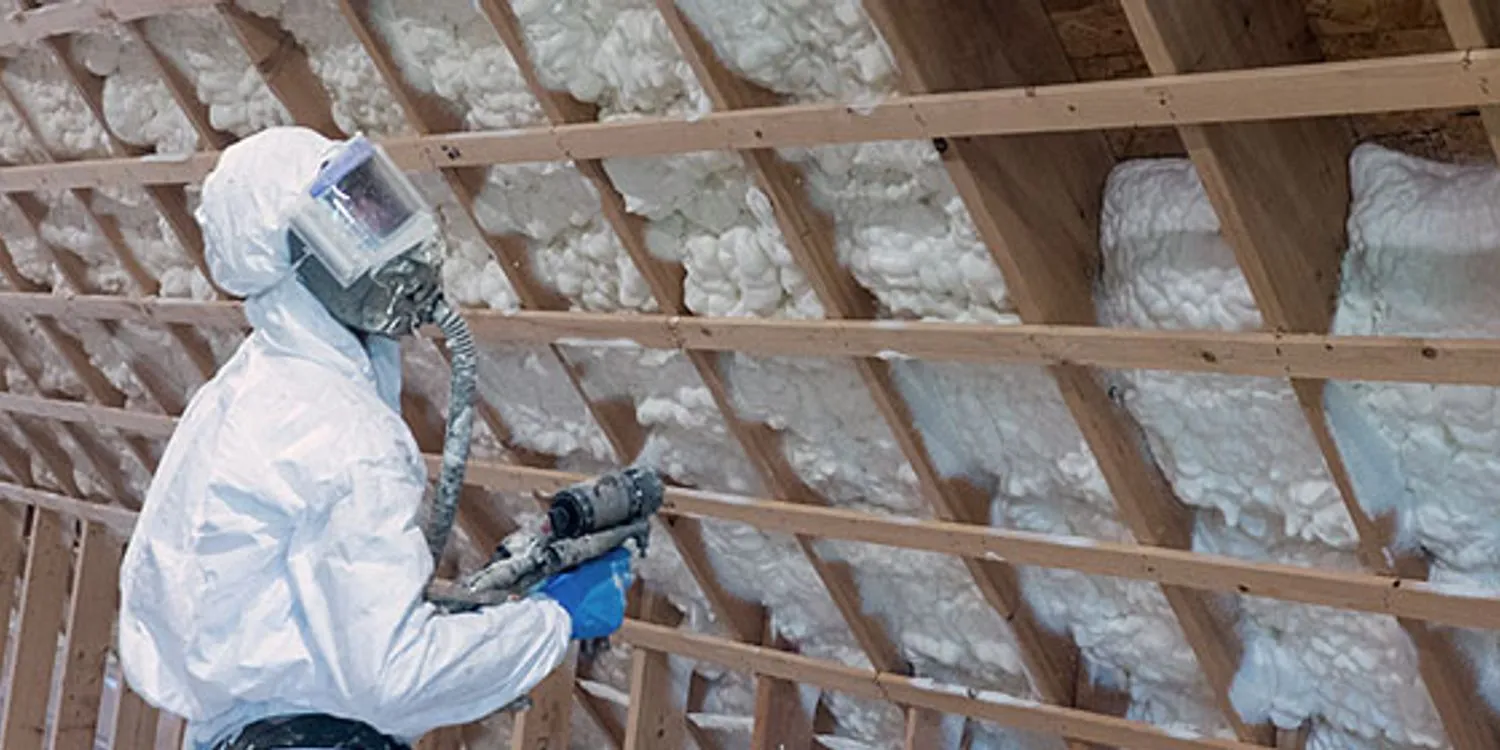
Installation is typically a one-day job for most Scottsdale homes. The crew staples reinforced foil to the rafter faces from the attic, working around ductwork and platforms, and the only evidence afterward is a cooler attic and a silver roofline overhead.
Scottsdale Spray Foam Insulation serves Scottsdale, Paradise Valley, Fountain Hills, Cave Creek, and Carefree. Call (480) 660-2705 to schedule your free estimate and find out what your attic is really doing to your summer bills.
Real Arizona Projects
Other Insulation Services
Common Questions
Is radiant barriers a good fit for Scottsdale-area buildings?
Yes. Radiant Barriers works well for many Scottsdale-area homes and commercial buildings, but the right choice depends on the space, the assembly and how it is used. During a free estimate we confirm whether radiant barriers or another option fits your building.
How much does radiant barriers cost?
Cost depends on the area being treated, the material and thickness, access and prep. Estimates are free and given in writing, so you know the price before any work begins.
How long does a radiant barriers project take?
Most projects are completed quickly once scheduled. Your written estimate includes the expected timeline for your specific Scottsdale-area project.
Want to Know What Your Project Would Cost?
Tell us about the property and we'll help you determine the next step.
Free Written Estimates • No Obligation • Local Arizona Team