
Spray Foam Insulation in Arizona
Closed-cell and open-cell spray foam for attics, walls, and crawl spaces.
Spray Foam Insulation in Scottsdale, AZ
Scottsdale Spray Foam Insulation installs spray polyurethane foam in attics, walls, crawl spaces, and garages across Scottsdale, Paradise Valley, Fountain Hills, Cave Creek, and Carefree. Spray foam is the highest performing insulation material we install, and the desert is where it proves itself. When a roof deck sits under direct Arizona sun and attic air climbs past 150 degrees on a July afternoon, the material between that heat and your ceiling decides how hard your air conditioner has to work. Call (480) 660-2705 to schedule a free estimate on spray foam for your home.
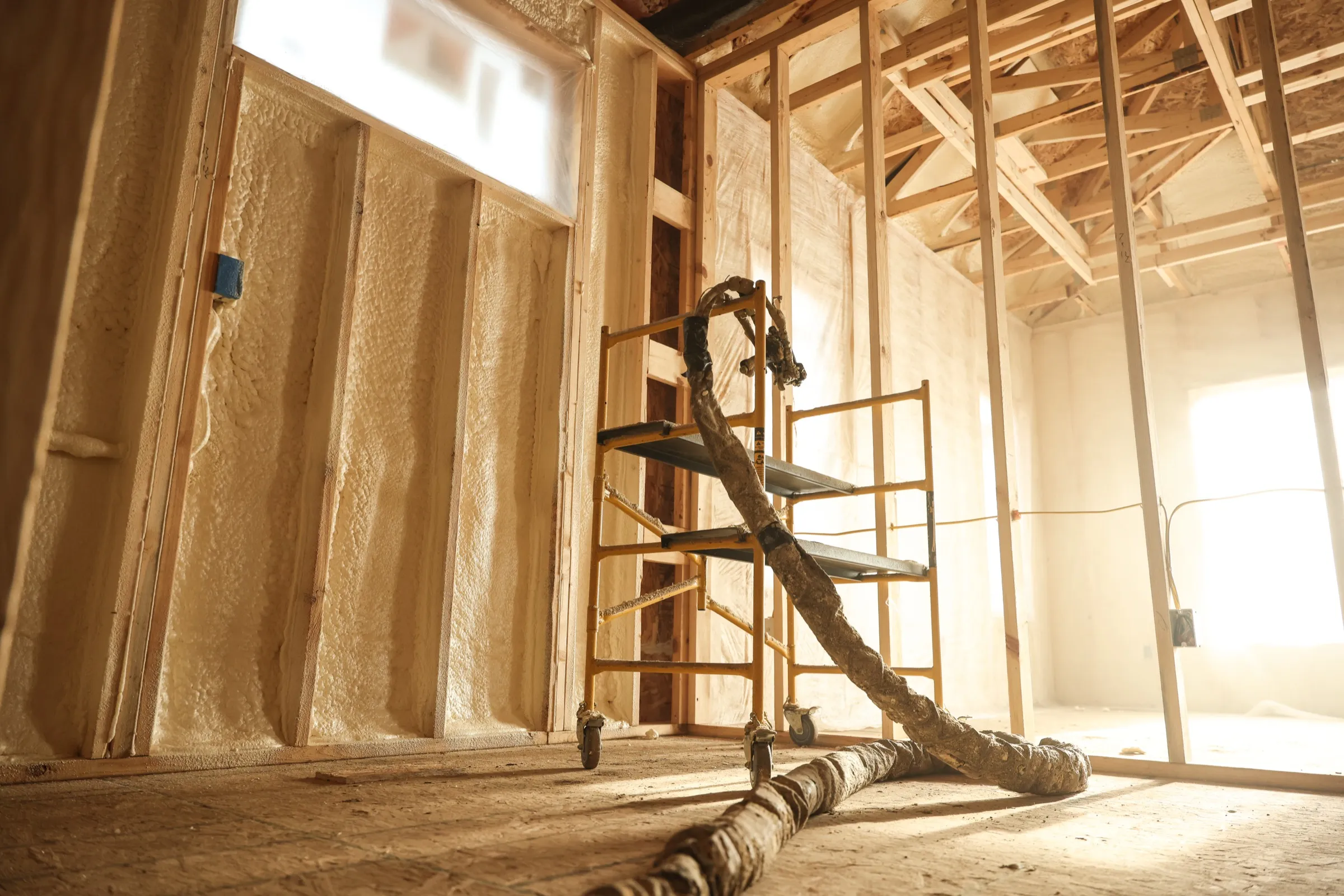
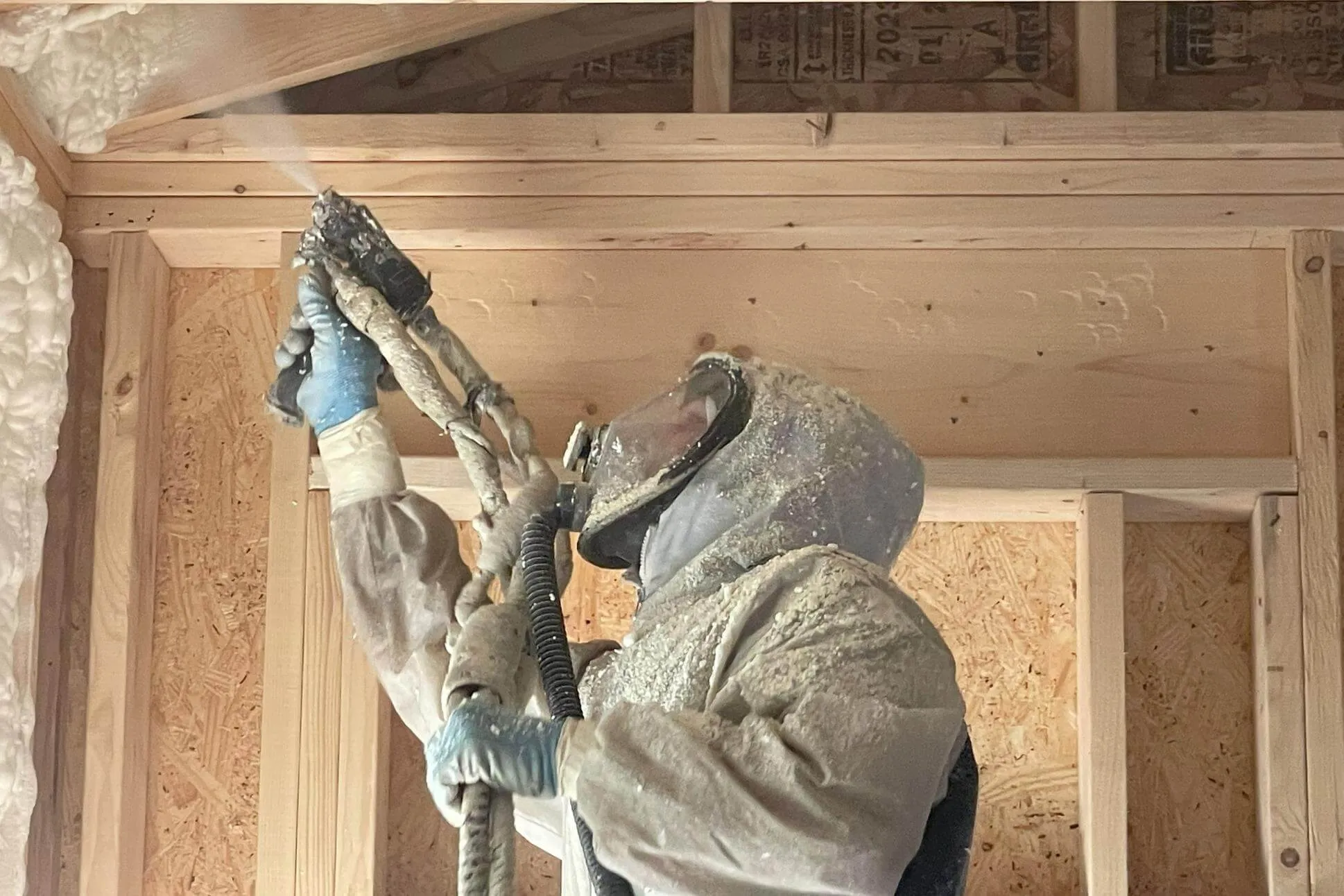
Spray foam is created on site when two liquid components meet at the tip of a spray gun, react, expand, and cure within seconds. Because it expands into the cavity where it is applied, it seals around wiring, plumbing penetrations, recessed lights, duct chases, and irregular framing that batts and loose fill simply cannot reach. That air sealing is a large part of why spray foam outperforms other materials in real houses, not just in laboratory R-value tests. Air leakage is the biggest source of energy waste in most Scottsdale homes, and spray foam addresses it directly.
We install both open cell and closed cell spray foam, and we recommend one or the other based on where the foam is going, what the assembly needs to do, and what your budget looks like. If your summer electric bills keep climbing, if upstairs rooms never cool down, or if your AC runs nonstop from May through September, call (480) 660-2705 and we will take a look.
How Spray Foam Performs in Arizona Heat
Heat moves three ways: conduction through solid materials, convection through moving air, and radiation from hot surfaces. A Scottsdale roof on a summer day delivers all three at once. The shingles or tile absorb solar radiation, the roof deck conducts that heat inward, and the attic air becomes a convection oven pressing down on your ceiling. Standard insulation slows conductive heat but does little to stop air movement. Spray foam does both, because it insulates and air seals in a single application.
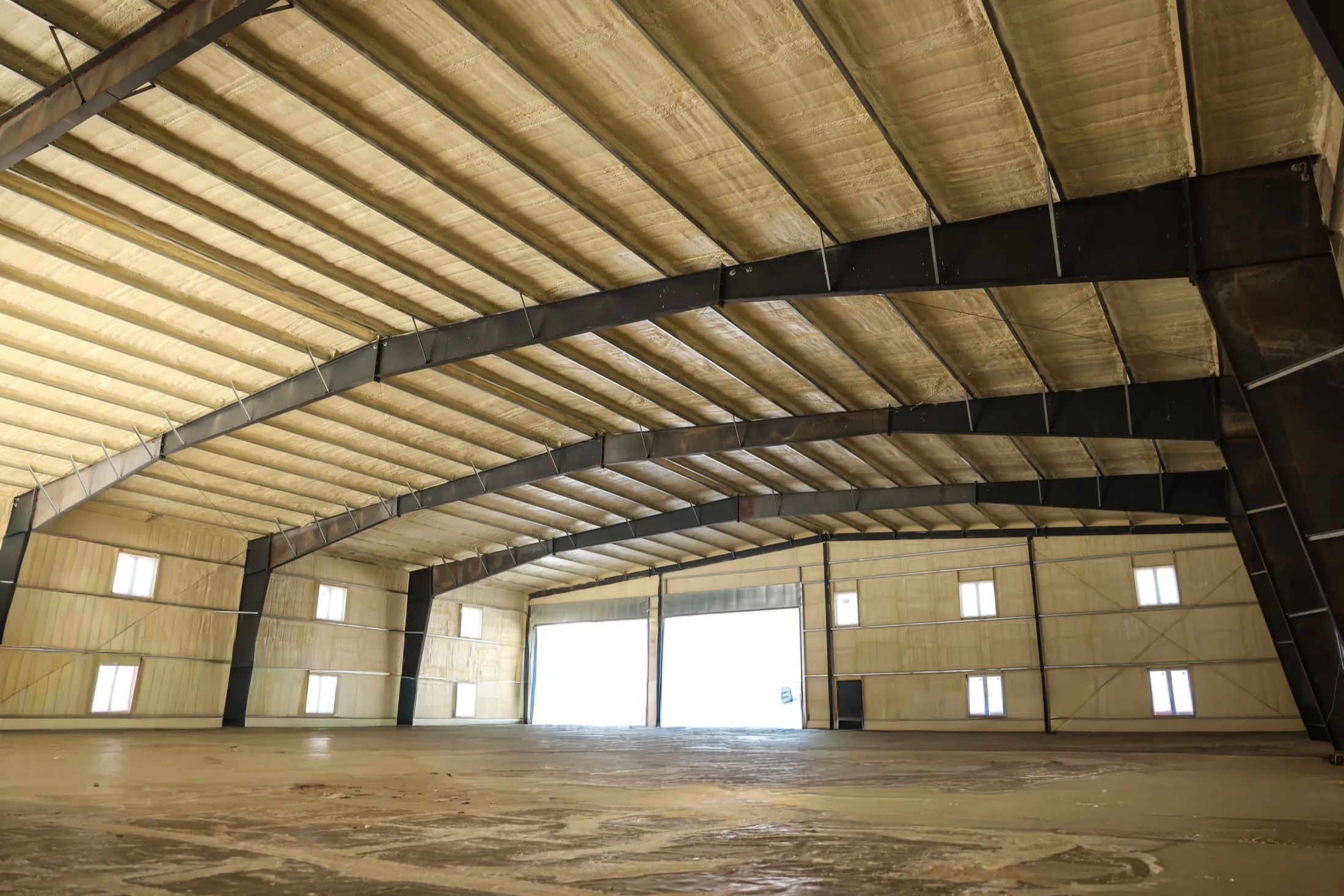
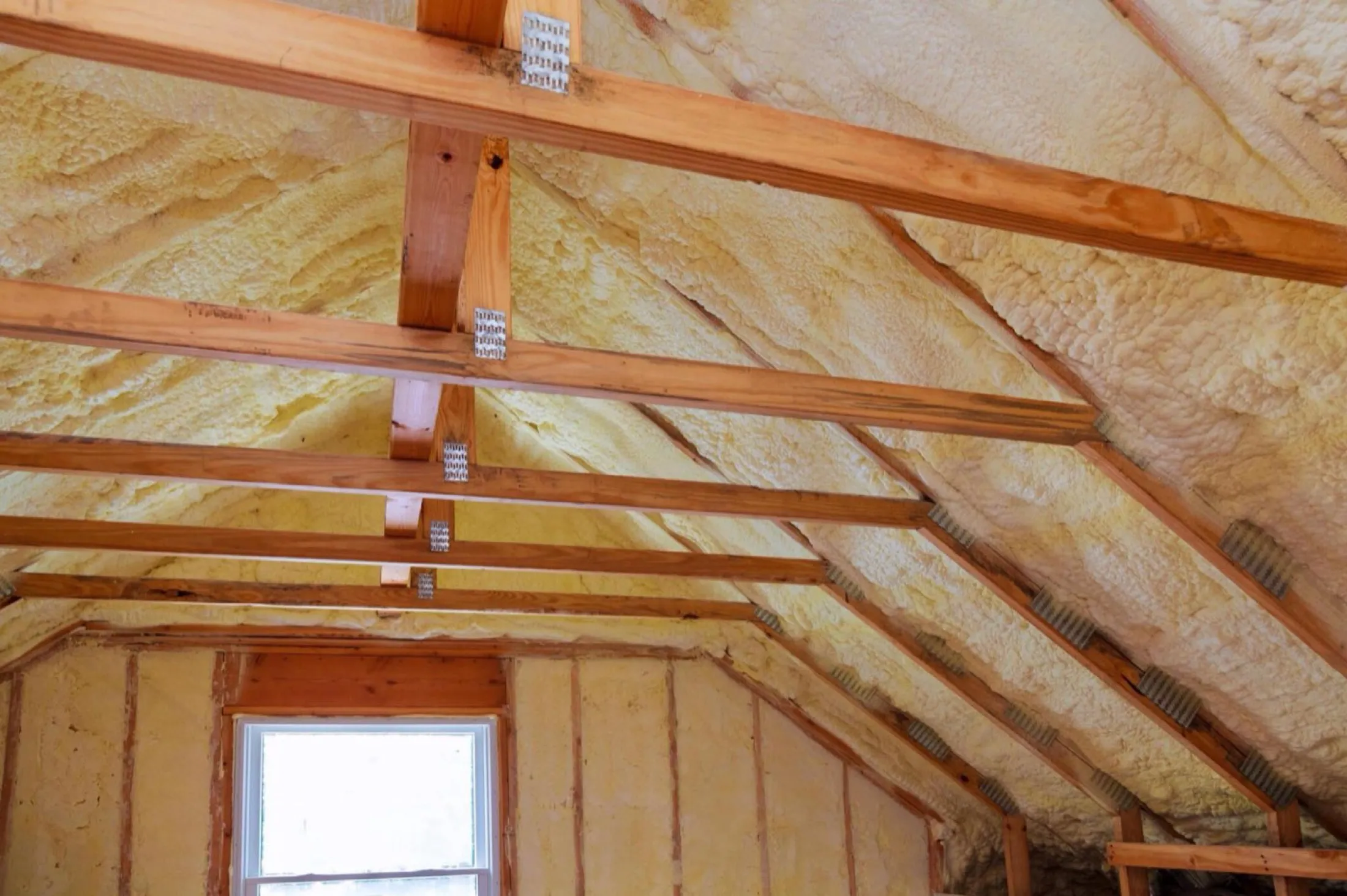
One of the most effective uses of spray foam in this climate is applying it directly to the underside of the roof deck, creating what building science calls an unvented or conditioned attic. Instead of fighting 150 degree attic air, the attic becomes a semi-conditioned space that stays far closer to indoor temperature. Ductwork that runs through the attic stops picking up heat on every run, and duct leakage stops dumping cooled air into a space you do not live in. For Scottsdale homes with complex rooflines, vaulted ceilings, or HVAC equipment in the attic, this approach often delivers the single biggest comfort improvement available.
Closed cell foam applied at the roof deck also adds rigidity to the roof structure and resists heat soak better than thinner materials. The result is a house that cools faster in the evening, holds temperature overnight, and puts less strain on an AC system that already works harder here than almost anywhere else in the country.
Open Cell vs. Closed Cell Spray Foam
Open cell spray foam is the lighter of the two products. Its cells are not fully closed, which gives it a soft, slightly spongy texture and an R-value around R-3.5 to R-3.8 per inch. It expands aggressively during application, often one hundred times its liquid volume, which makes it excellent for filling deep or irregular cavities and for sound dampening between rooms and floors. Open cell foam is vapor permeable, meaning moisture can pass through it and assemblies can dry. In attics and interior applications where thickness is not restricted, open cell is often the cost-effective choice.
Closed cell spray foam is denser, roughly two pounds per cubic foot, and delivers about R-6 to R-7 per inch. Its cells are fully closed and filled with an insulating gas, so it resists both air and water vapor. At about two inches of thickness it functions as a vapor retarder, which matters in roof assemblies and anywhere moisture control is a concern. Closed cell foam also adds measurable structural strength to walls and roof decks because it cures hard and bonds tightly to framing.
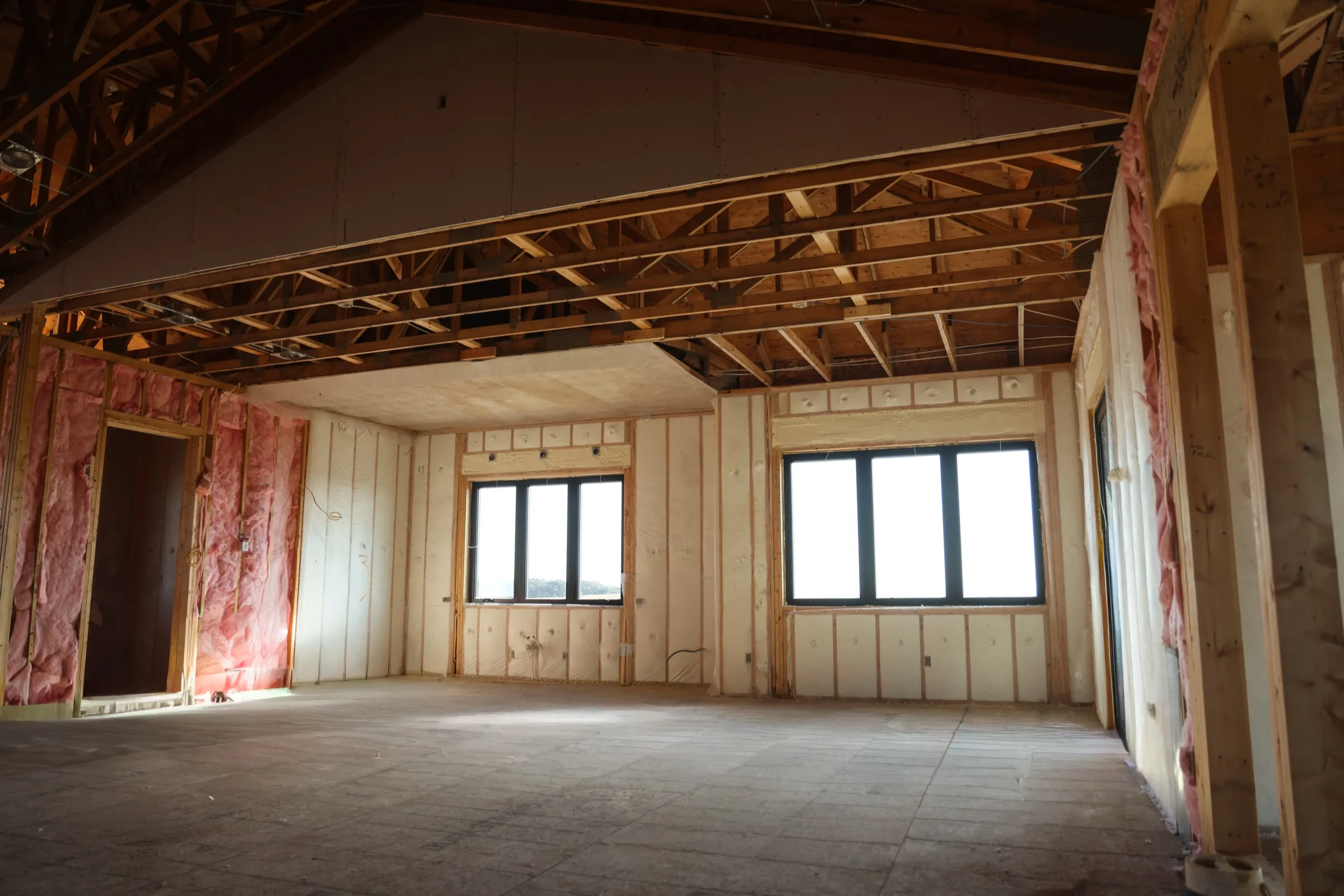
Neither product is universally better. Open cell wins on cost per square foot and sound control. Closed cell wins on R-value per inch, moisture resistance, and rigidity. Many Scottsdale projects use both: closed cell at the roof deck or in shallow cavities where every inch counts, open cell in deep attics or interior walls. When we walk your home, we will show you exactly where each one makes sense. Call (480) 660-2705 to set up that walkthrough.
Where Spray Foam Works Best in Scottsdale Homes
Attics and roof decks are the most common application, because that is where Scottsdale homes take the worst beating from the sun. But spray foam earns its keep in several other places. Garage ceilings under bonus rooms or bedrooms are a classic weak point: the garage bakes all summer and the room above never cools properly until the ceiling is foamed. Walls opened during a kitchen or bathroom remodel are another ideal opportunity, since the cavities are exposed and a few inches of closed cell foam can bring a 1970s block wall assembly up to modern performance.
Crawl spaces, rim joists, and stem walls in older homes benefit from closed cell foam because it seals and insulates in one step. Cantilevered floors, skylight shafts, and the kneewalls behind upstairs closets are all spots where batts routinely sag or leave gaps and where spray foam fills the cavity completely.
Scottsdale housing stock ranges from post-war ranch homes to new custom builds, and the right scope is different for each. A single-story 1970s ranch in the southern part of the city usually needs attic work first. A two-story home from the 1990s often needs the garage ceiling and roof deck addressed. We tailor the plan to the house, not the other way around.
R-Values and IECC Energy Code Requirements
R-value measures resistance to conductive heat flow, and higher numbers mean more insulating power. Scottsdale sits in IECC climate zone 2, and current energy code for this zone calls for attic insulation at R-38 in most assemblies, with wall requirements that vary by framing type and cavity depth. Homes built before the early 2000s often have attic insulation in the R-11 to R-19 range, which is a fraction of what current code expects for new construction.
Meeting R-38 with spray foam is straightforward. Open cell foam at roughly R-3.7 per inch needs about ten to eleven inches to hit R-38, which is easy in an open attic floor application. Closed cell at R-6.5 per inch reaches R-38 in about six inches, and it gets there at the roof deck where space can be tighter. For wall cavities, three inches of closed cell in a two-by-four stud bay delivers around R-19 while also air sealing the cavity, something a code-minimum batt cannot do on its own.
R-value is not the whole story, and we will be honest with you about that. Two homes with identical R-values can perform very differently if one is air sealed and the other leaks. Spray foam's advantage is that it delivers the rated R-value in the field because it does not sag, settle, or leave gaps. Call (480) 660-2705 and we will measure what your home actually has today before recommending anything.
Monsoon Season and Moisture Control
Arizona is dry most of the year, but monsoon season from roughly late June through September changes the math. Humidity spikes, roof leaks show up without warning, and wind-driven rain finds every weakness in a building envelope. Moisture behavior in your insulation matters during those months, and it is worth understanding before you choose a material.
Closed cell spray foam resists bulk water and acts as a vapor retarder at sufficient thickness, so wind-driven moisture that gets past the roof covering does not soak into the insulation itself. Open cell foam will absorb water if a roof leak reaches it, which sounds like a drawback but actually has an upside: leaks show up as visible drips or stains instead of hiding inside the assembly and rotting the deck for years undetected. Either way, the foam itself does not support mold growth, and neither product is a food source for pests.
The bigger moisture risk in Scottsdale homes is condensation on ductwork and air handlers sitting in brutally hot attics. Moving the thermal boundary to the roof deck with spray foam brings that equipment inside the conditioned envelope and largely eliminates the condensation problem. It is one of the less obvious benefits that homeowners notice after the first monsoon season.
Spray Foam Insulation Cost in Scottsdale
Spray foam costs more per square foot than blown or batt insulation, and any contractor who tells you otherwise is not being straight with you. As a general picture of typical market ranges in the Scottsdale area, open cell foam often runs roughly $0.50 to $0.80 per board foot and closed cell foam roughly $1.00 to $1.50 per board foot, depending on thickness, access, and job size. A whole-attic project commonly lands somewhere in the mid four figures, with smaller targeted jobs costing less and large or complex homes costing more. These are ranges, not quotes, and your home's layout drives the real number.
The way to think about cost is against what the foam replaces. Spray foam does the work of insulation plus the work of air sealing, which would otherwise be a separate line item. It also does not need to be topped off or replaced the way loose fill sometimes does. Homeowners typically see the difference in summer electric bills within the first cooling season, and the comfort difference shows up immediately.
We provide written estimates at no charge, with the scope broken out so you can see exactly what each area costs. Call (480) 660-2705 to schedule yours.
What to Expect From Our Spray Foam Installers
Every job starts with a walkthrough. We measure the spaces, look at your existing insulation, check ventilation and duct locations, and ask about the rooms that bother you most. Then we put together a written scope that tells you which product we recommend, at what thickness, and why. You will know the R-value you are buying before any work begins.
On install day, the crew masks and protects surfaces near the work area, because overspray is a real thing and we treat your home accordingly. The foam is mixed and applied from truck-mounted equipment, and most residential attics are completed in a single day. Spray foam requires a short re-entry window while it cures and off-gasses, and we will tell you exactly how long to stay out of the work area, typically a matter of hours for open cell and similar for closed cell with ventilation.
Afterward, we clean up, walk the job with you, and answer questions about what was installed and where. If you want a straight answer about whether spray foam is right for your house, call (480) 660-2705. Scottsdale Spray Foam Insulation serves Scottsdale, Paradise Valley, Fountain Hills, Cave Creek, and Carefree, and estimates are always free.
Real Arizona Projects
Other Insulation Services
Common Questions
Is spray foam insulation a good fit for Scottsdale-area buildings?
Yes. Spray Foam Insulation works well for many Scottsdale-area homes and commercial buildings, but the right choice depends on the space, the assembly and how it is used. During a free estimate we confirm whether spray foam insulation or another option fits your building.
How much does spray foam insulation cost?
Cost depends on the area being treated, the material and thickness, access and prep. Estimates are free and given in writing, so you know the price before any work begins.
How long does a spray foam insulation project take?
Most projects are completed quickly once scheduled. Your written estimate includes the expected timeline for your specific Scottsdale-area project.
Want to Know What Your Project Would Cost?
Tell us about the property and we'll help you determine the next step.
Free Written Estimates • No Obligation • Local Arizona Team